The organization
The client is a fire alarm inspection company working for property managers and building owners across Ontario. Its technicians inspect alarm systems, extinguishers, emergency lighting, standpipes and sprinklers on the cycle the fire code requires. Every visit has to produce a report the building owner can file and an inspector can check, and anything found wrong has to turn into work that actually gets done.
The challenge
The company ran its inspections on Excel spreadsheets and PDF reports built by hand. Job details lived in one place and inspection results in another, so every report meant retyping the same information. Deficiencies found on site were tracked by hand, which meant turning them into quoted work and follow-up visits depended on someone remembering to do it.
What we built
Scheduling and dispatch
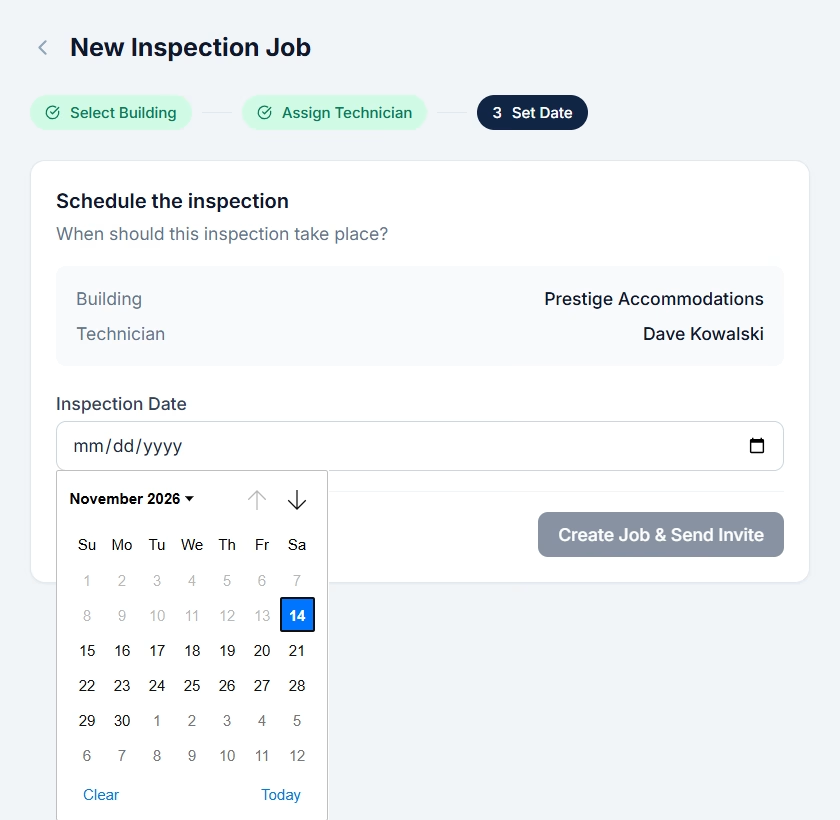
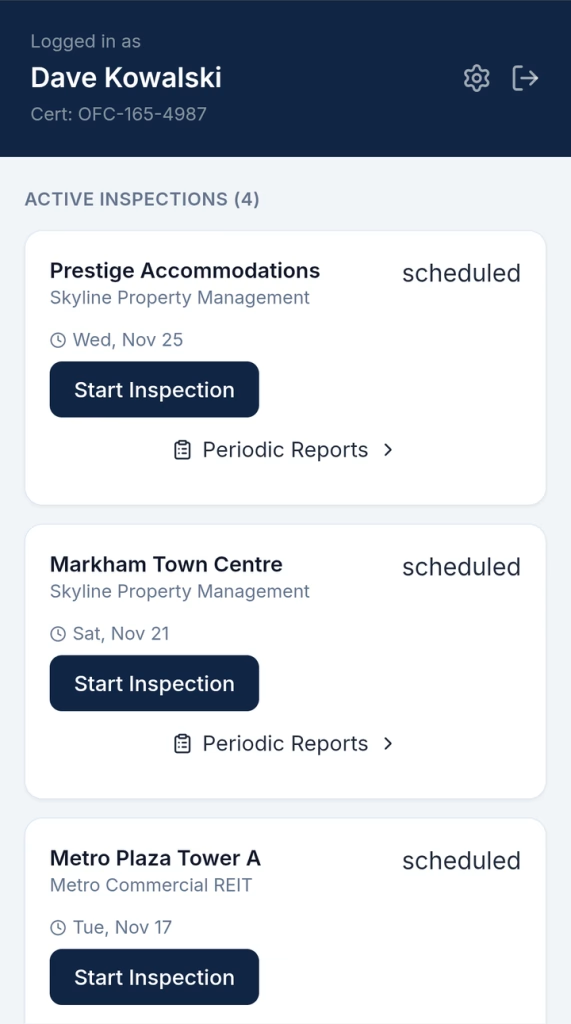
The office picks a building, assigns a technician and sets a date. Jobs can be rescheduled, reassigned or cancelled, and every job carries a status from scheduled through in progress, submitted and archived.
Notifications that run themselves
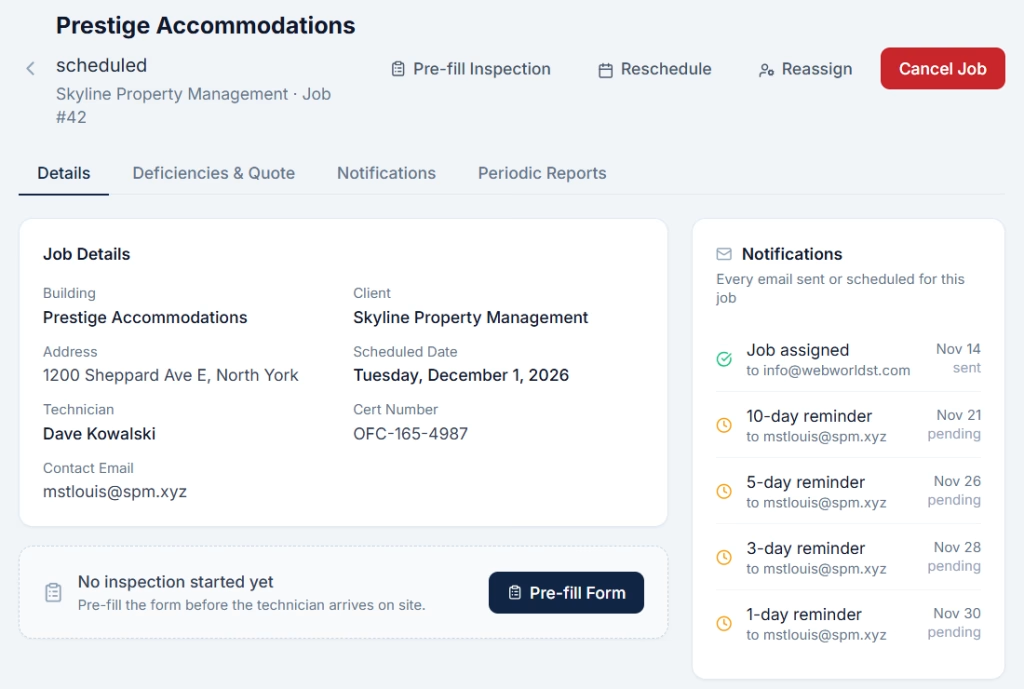
The building contact is emailed when a job is booked, then reminded at ten, five, three and one day before the visit. Every message sent or scheduled for a job is listed on the job itself, so the office can see what the client has received without going back through a mailbox.
A device inventory that follows the technician’s route
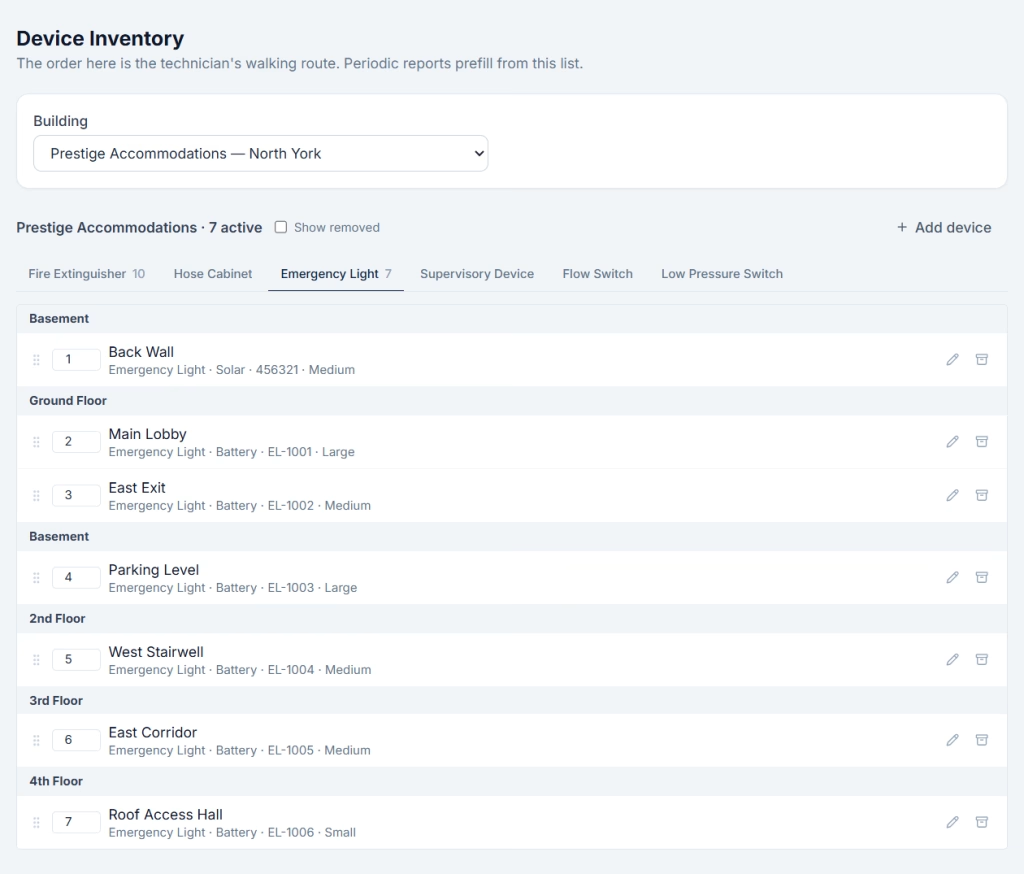
Extinguishers, hose cabinets, emergency lights, flow switches and supervisory devices are recorded by floor and location, in the order a technician actually walks the building. Periodic reports prefill from that list rather than being typed out each visit.
Inspection reporting built to the standard
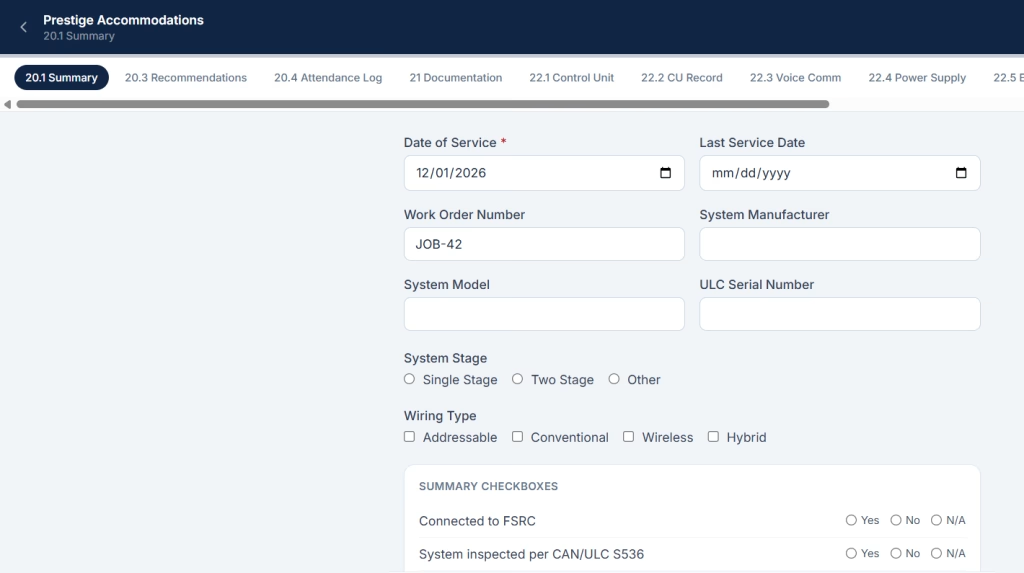
The technician works through a twenty-section form covering the control unit, power supply, annunciators, voice communication and the rest, aligned to CAN/ULC S536, with answers saved as they go. Office staff can pre-fill a form before the technician arrives. Fire extinguisher and hose, emergency lighting, standpipe flow test, fire pump and sprinkler inspections each attach to the job they belong to.
Deficiencies become quoted work
Problems found on site go onto a quote for the building owner, and accepted work becomes a correction job in the technician’s queue rather than a note someone has to chase.
How we approached it
We watched the work before designing any of it. We interviewed the team at length and had them walk us through a full inspection the way they do it now: the spreadsheet, the report, the handoffs between the office and the van.
We separated what they need from what they’d like. Every request got sorted into one pile or the other, and the build was shaped around the first pile. The wish list is written down, not lost, and it gives the platform somewhere to go next.
We looked for steps to remove, not just screens to add. The device inventory is ordered as a walking route because that’s how the technician moves through a building. Periodic reports prefill from that list. Reminders go out on a schedule instead of someone remembering. Each of those is a step that used to take a person and now doesn’t.
We built to the standard they already work to. The inspection form follows the structure of CAN/ULC S536 rather than asking the technicians to learn a new one, so the system fits the way the trade already works.
Where it stands
The platform is built and delivered. The company is scheduling training over the holidays, when inspection work slows down, and goes live in early 2027. We’ll add results here once they’ve run a season on it.
Ongoing support
Web World hosts the platform, maintains it and supports the team using it, and will scale the infrastructure as their client list grows.