The organization
Southern Ontario Counselling Centre is a group of seven licensed therapists working in St. Agatha and online across Ontario. Each runs their own practice and brings a different focus (individuals, couples, families, children and teens), so the centre’s real job is connecting someone to the right practitioner rather than to a service.
The challenge
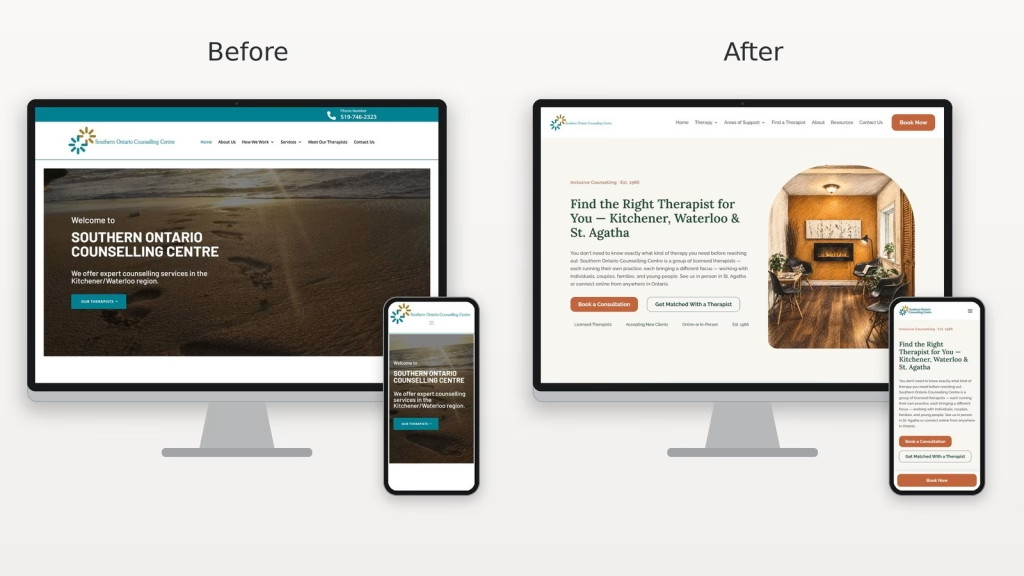
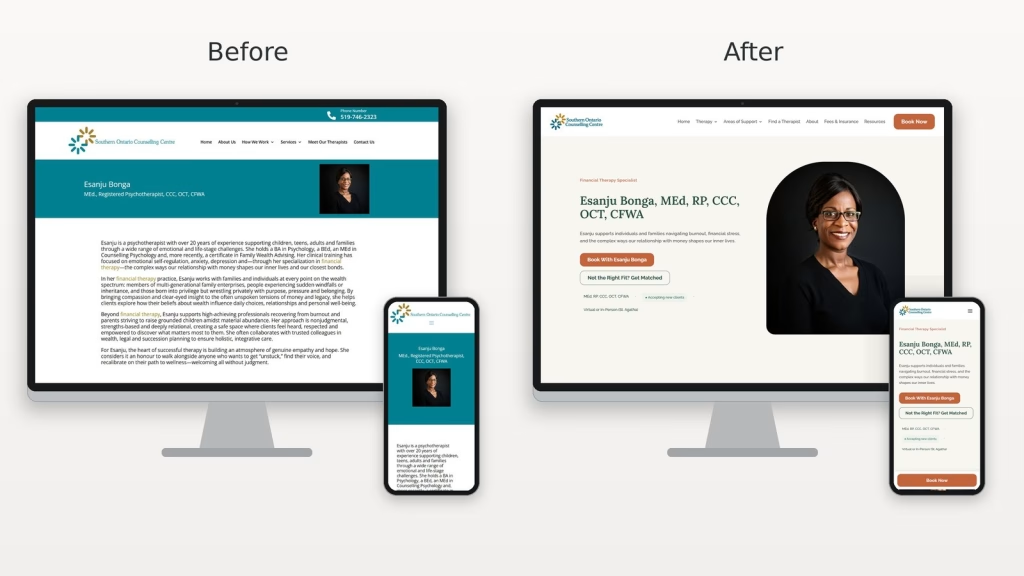
We built the centre’s previous website with them, structured the way the practice described its own work: by therapy method. The navigation read Home, About Us, How We Work, Services, Meet Our Therapists and Contact Us, and the service pages were named for methods such as CBT-p, IMAGO, play therapy and sex therapy. Those terms mean little to someone in distress, who had to know what they needed before they could find anyone.
The homepage led with the centre’s name and the line “We offer expert counselling services in the Kitchener/Waterloo region.” Fees appeared nowhere on the site. Therapists sat on a single page with no sign of who was accepting clients, and “Book an Appointment” went to a general contact form, so the first move anyone could make was to write a message and wait. The practice had outgrown that structure.
What we built
Navigation built around what people are facing
“Areas of Support” replaces the methods list with nine entries, from anxiety and stress, trauma and burnout to grief and loss, family conflict and life transitions. We wrote the copy for each. The therapy approaches are still there for people who want them, but they’re no longer the way in.
A matching tool that recommends before it asks
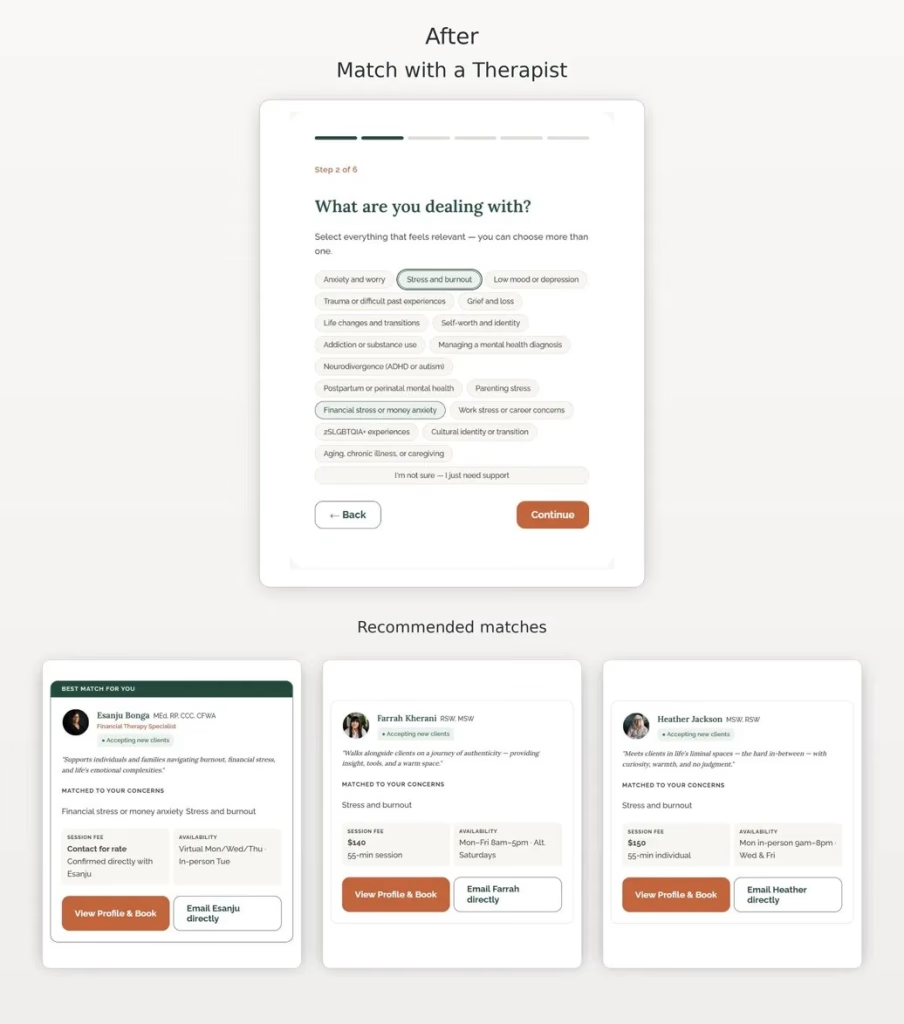
Six short steps, starting with who the therapy is for and what’s going on. The recommendation appears first; contact details are requested only afterwards, and only if the person wants someone to reach out. Crisis lines, including 911 and the region’s 24/7 crisis services, are shown inside the flow.
Therapist profiles that answer the practical questions
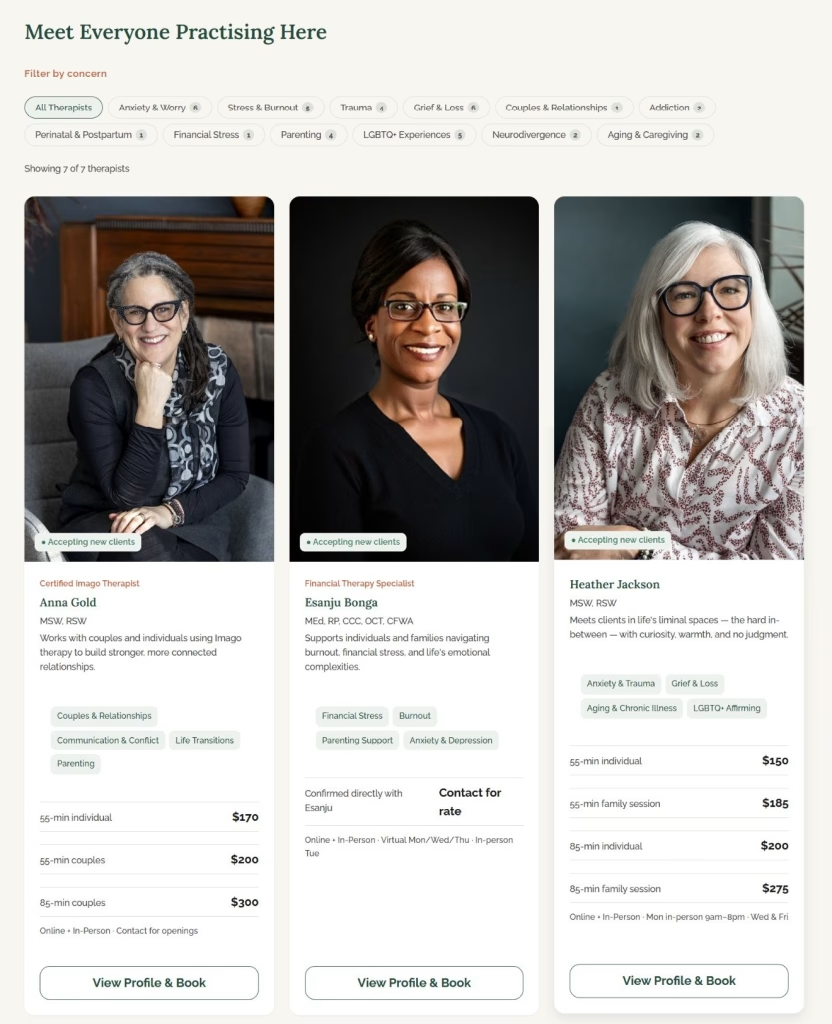
Each of the seven profiles shows credentials, focus, session fees where the therapist sets them, and whether they’re currently accepting new clients, with a direct route to booking.
Fees and insurance published
Individual sessions run $140 to $170, stated on the site rather than on request, and the centre issues a receipt after every session for extended health plans.
How we approached it
We started from the question people actually arrive with. Not “what kind of therapy do I want” but “I’m struggling with this. Who can help?” Every structural decision followed from that.
We removed the cost of asking. Publishing fees and availability, and showing a match before asking for contact details, takes the risk out of a first step that’s already hard to take.
We kept the clinical language available, not mandatory. Therapy approaches still have their own pages for the people who search that way.
We kept the matching tool light. It runs in plain JavaScript inside the page, with no extra plugins to maintain, and Gravity Forms handles the single submission when someone asks to be contacted.
Where it stands
The new site went live in November 2026, six weeks after work began. We’ll add results here once there’s a meaningful stretch of data behind it.
Ongoing support
Southern Ontario Counselling Centre has been a client since 2023. We host and maintain the site.